
If we say “Prónay Castle” today, it may seem natural to begin its story with the Prónay family. Yet to understand how the castle came into being, we first need to follow the history of two other families: the Jeszenszkys and the Kosztolányis.
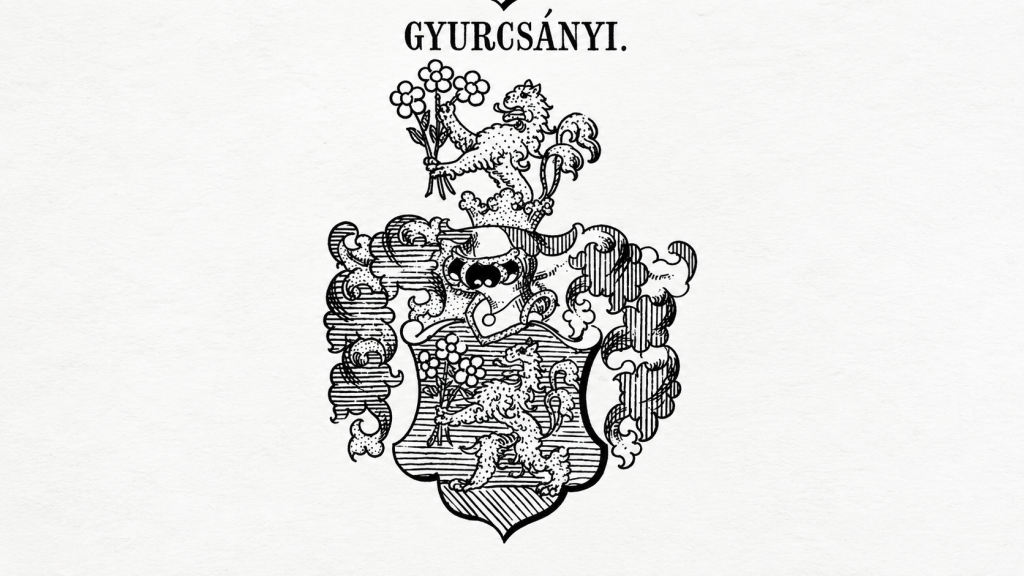
By the early 18th century, the Jeszenszky family was already among the landowners of Alsópetény. Through family ties, however, the story of the estate branched out further. According to the genealogical records available to us, the Kosztolányi family appears through one of the female lines of the Jeszenszky family, and later the Gyurcsányi family enters the story through Krisztina Kosztolányi.
Krisztina Kosztolányi was married to Imre Gyurcsányi of Moysfalva, a Knight of the Golden Spur and assessor of the Royal Court. Iván Nagy’s genealogical work also clearly identifies them as husband and wife. The Gyurcsányi family originally came from Moysfalva in Trencsén County and later became landowners in Bars and Nógrád Counties as well.
This is how the Gyurcsányi name became part of the history of Alsópetény. And at this point, we arrive directly at the early history of what is now known as Prónay Castle.
The castle was not originally built for the Prónay family. According to the heritage description of Alsópetény, both the Baroque main castle and the smaller castle were built by the Gyurcsányi family around 1750. The main castle was constructed as a single-storey, U-shaped building, while the smaller castle was also designed in the Baroque style, with distinctive corner projections topped by mansard roofs.
Later local-history summaries highlight Ignác Gyurcsányi in the early history of the castle, naming him as the builder and original owner of the residence erected in the 1750s.
The presence of the Gyurcsányi family in Alsópetény, however, meant far more than simply owning a castle. The family held an estate here, had a burial place on the church hill, and their name is connected to several other historic landmarks in the village. By the end of the 18th century, sources clearly refer to a Gyurcsányi estate; it was on this estate that the Jewish community of Alsópetény was also able to settle in larger numbers.
The crypt of the Gyurcsányi family can still be found on the church hill today, with the Werbőczy Memorial standing above it. The pyramid-shaped monument was erected in the late 18th century by the widow of Ignác Gyurcsányi, née Terézia Blaskovics. The family therefore left its mark on Alsópetény not only as landowners, but also as one of the families that helped shape the historical character of the village.
Sources
- Iván Nagy: Magyarország családai czímerekkel és nemzedékrendi táblákkal – genealogy of the Gyurcsányi family of Moysfalva.
- József Végh: Werbőczy István faluja: Alsópetény.
- Csaba Ákos Zelnik: Alsópetény. Történeti emlékek, fejezetek Alsópetény múltjából.
- Samu Borovszky (ed.): Magyarország vármegyéi és városai – Nógrád vármegye.